Residential Lockout & Rekeying in Guelph
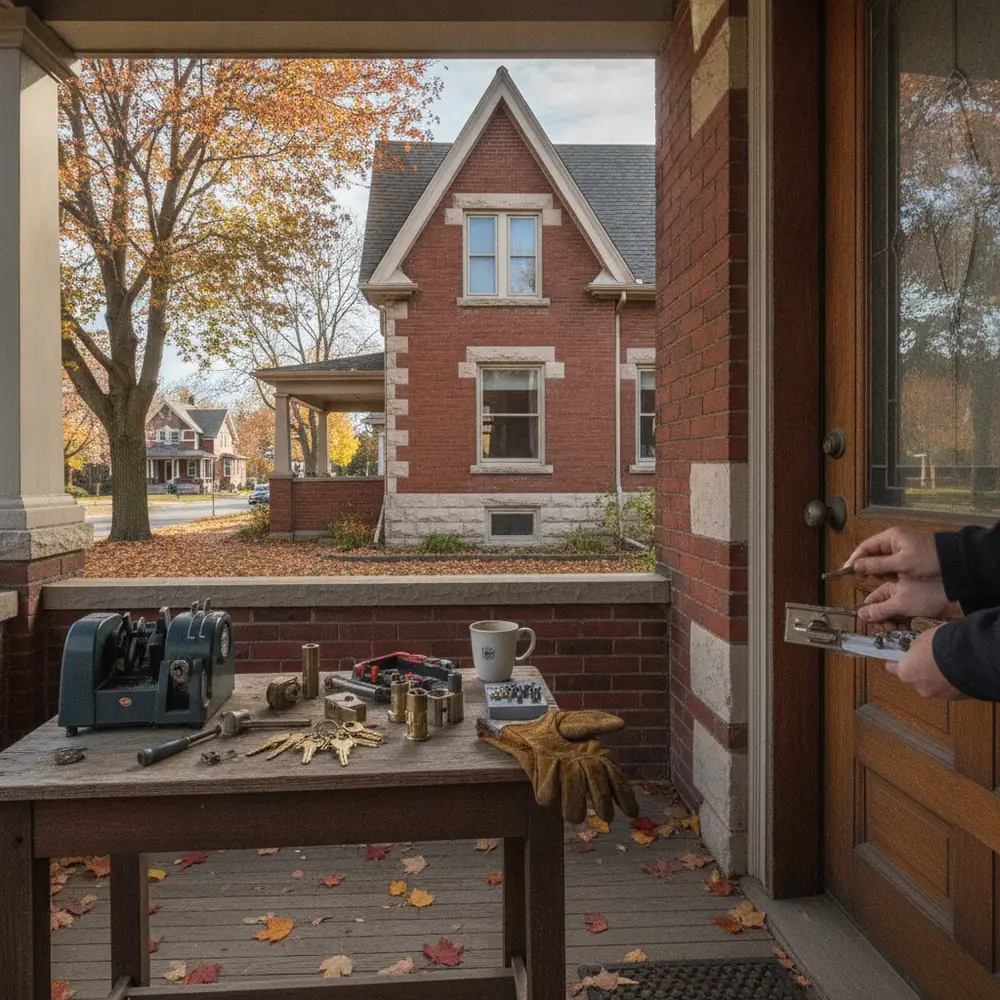
Locked out at home is one of the most common calls we get — a door that locked behind you, a lost or broken key, or a lock that's simply seized up. Entry is non-destructive in the large majority of cases: picking or bypassing the existing lock rather than drilling, so your hardware survives the visit.
Rekeying is different from replacing a lock — the cylinder inside is refitted to work with a new key while the hardware on your door stays the same, which is why it's the standard move after a move-in, a lost key, or handing back a key you'd rather not have floating around. One key can often be cut to work across all your exterior doors.
- Non-destructive lockout entry, 24/7 dispatch
- Rekeying to a single new key across multiple doors
- Broken key extraction from a cylinder
- Deadbolt and lock hardware upgrades where the existing hardware is worn out
What it costs in Guelph
- Standard home lockout: $80–$150
- Rekeying: $25–$40 per cylinder + service call
- Broken key extraction: $60–$120
- After-hours (overnight/weekend) premium applies — quoted before dispatch, never after
Residential Lockout & Rekeying FAQs
What do I need to prove it's my home?
Photo ID matching the address, or another way to confirm residency (mail, a neighbour who can vouch, a landlord's confirmation for tenants). This protects you — it's the same check that stops someone else from locking you out for good.
Can you rekey without replacing my whole deadbolt?
Yes — that's exactly what rekeying is. The existing hardware stays; only the internal pins change to match a new key.
How many keys can be cut after a rekey?
As many as you need, cut on the spot in most cases. Many clients rekey all exterior doors to one master key for convenience.
My key snapped off inside the lock — now what?
Don't try to dig it out with pliers or superglue (we see this go wrong constantly) — call for extraction. Most broken keys come out clean without damaging the cylinder.